Turn a shared inbox into a tracked request process
Requests and approvals handled through a shared mailbox, where nobody can see who is dealing with what. We give every request an owner, a status and a due date, without changing how people submit them.
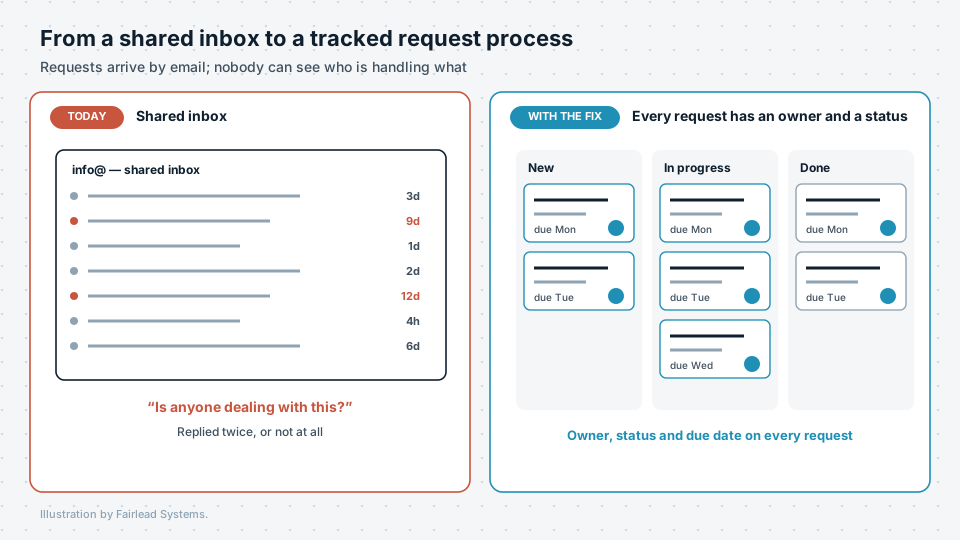
What it looks like today
Requests arrive in a shared mailbox: from residents, partners, clients, colleagues or suppliers. Several people can see them, so everyone assumes someone else has picked them up. Some are answered twice. Some are not answered at all. Approvals travel as forwarded emails, and the latest decision is somewhere in a thread.
Nobody can easily answer basic questions: how many requests are open, how long they have been waiting, or which ones are close to a deadline. Those questions get answered by searching the inbox, which takes time and is easy to get wrong.
What we build
People keep sending requests the way they do now. Each new message or form submission becomes a request record with an owner, a status, a due date and the full history attached. Approvals happen on the record, with the decision and the approver logged, instead of in a chain of replies.
The team works from a simple board or list that shows what is new, what is in progress and what is overdue. Reminders go to the owner before a deadline, not after. A weekly summary shows volumes and waiting times without anyone building it.
This is usually built in Airtable or with Microsoft 365 tools, connected to the mailbox you already have.
What you get
- The request process mapped as it actually runs, including the informal parts.
- The tracking system built in your own account, with views for each role.
- Documentation and a walkthrough for whoever will run it.
Where it fits
Service and enquiry teams in councils, NHS trusts and universities. Charities handling referrals, grant applications or volunteer queries through one address. Small businesses where customer requests, quotes and approvals currently live in the owner’s inbox.
Is this costing you time?
Describe how the process runs today. We will tell you whether it is worth automating, and what it would involve, before anything is agreed.