From the public record · London 2020 · Ireland 2021
A backup you have never restored is a hope
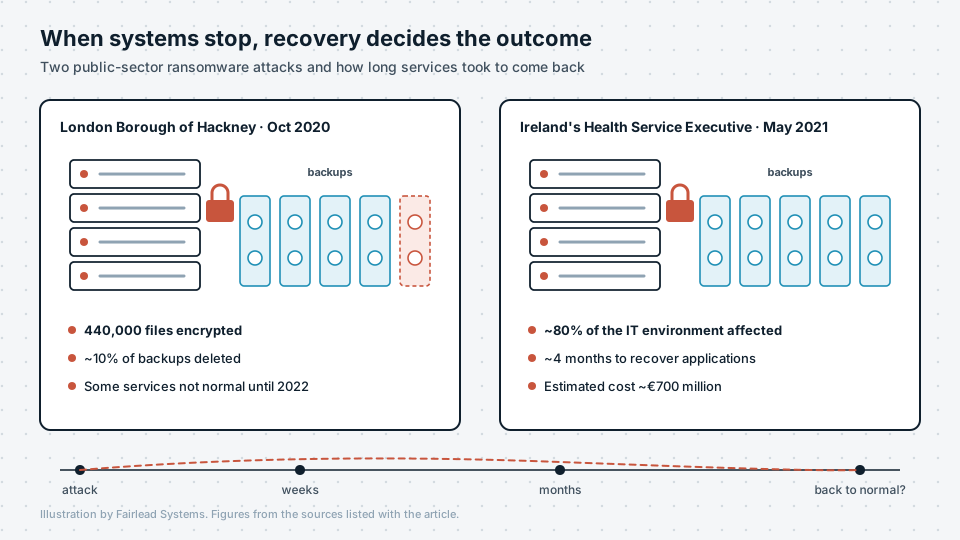
Ransomware attacks on Hackney Council in 2020 and Ireland's health service in 2021 disrupted services for months. The question that matters is whether a service can keep running, and whether recovery has ever been tested.
What happened
In October 2020 a ransomware attack on the London Borough of Hackney encrypted 440,000
files and deleted around 10% of backups, affecting at least 280,000 residents and others.
Some services did not return to normal until 2022. The ICO issued a reprimand in July 2024.
On 14 May 2021 a ransomware attack affected around 80% of the IT environment of Ireland’s
Health Service Executive. Full recovery of applications took about four months, with
estimated costs of around €700 million.
The pattern
When systems go down, the questions that decide the outcome are practical ones. Can the
service still help people today, on paper if necessary? Has anyone actually restored the
data it depends on, rather than assuming the backup works?
Those questions are rarely answered well in the middle of an incident. They are answered, or not, by what was prepared beforehand.
What a proportionate fix looks like
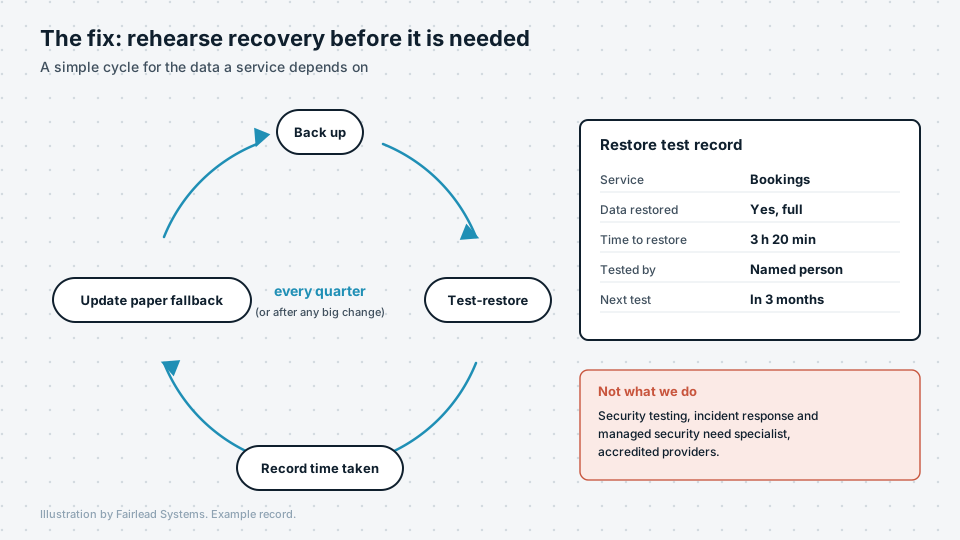
A simple rehearsal cycle for the data a service depends on. Example record.
We do not offer security testing, incident response or managed security; those need
specialist, accredited providers. What we do is narrower and often missing: test-restore
the data a service depends on and record the result, design a simple offline fallback for
the most critical processes, and write down the manual procedure so it exists before it is
needed.
A useful first question for any team: when did we last restore this service’s data, and
how long did it take?
None of this needs new software. It needs an afternoon, a named owner, and a calendar reminder to do it again.
Questions worth asking
Which of our services would stop first if the main system went down?
When did we last restore that service’s data, and how long did it take?
Is there a written way to keep helping people without the system, and do staff know where it is?
Who would decide, on the first morning, what happens next?
Fairlead Systems was not involved in the events described here. The account above is drawn only from the sources listed, which were last checked on 1 October 2026. If you spot an error, write to us and we will correct it.
Insights
More from the public record
From the public record · UK central government · 2022
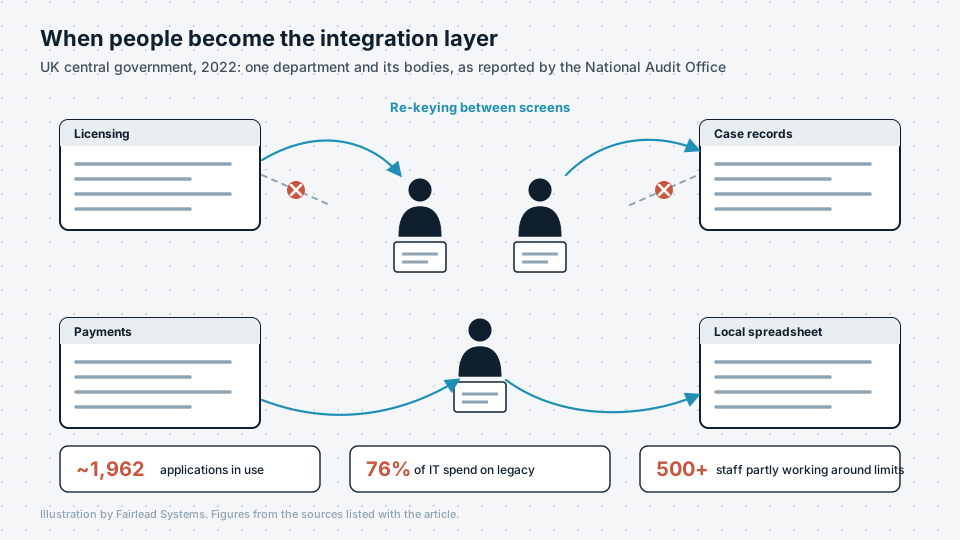
A 2022 National Audit Office report found a government department running around 1,962 applications, with legacy systems taking 76% of IT spend and more than 500 staff working around their limits.
Replacement is slow, so people re-key data between systems that cannot talk to each other.
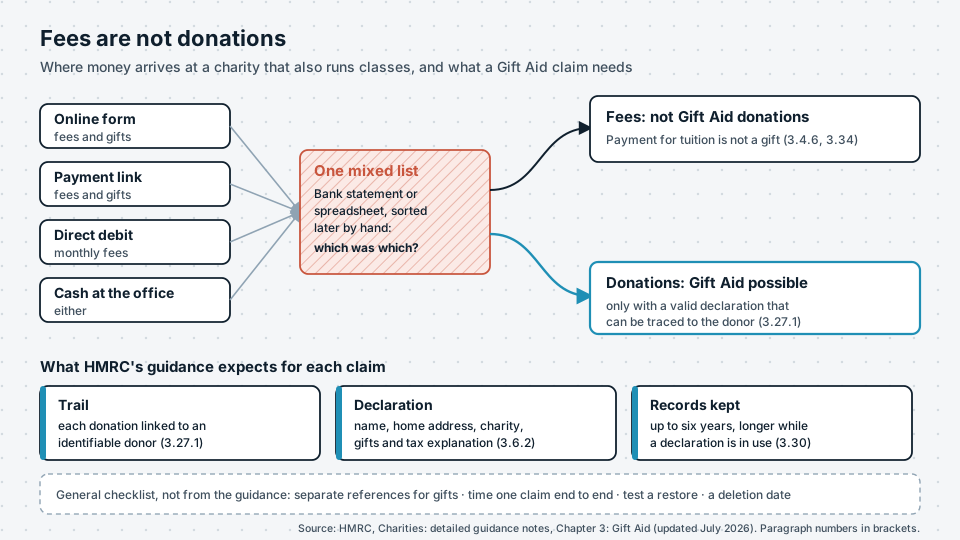
HMRC's Gift Aid guidance says payments for tuition are not gifts, and that every claim needs an audit trail from each donation to a valid declaration. Charities that take fees and donations through the same channels have to keep the two apart.
When fees and donations share one record, the Gift Aid claim inherits every mix-up.
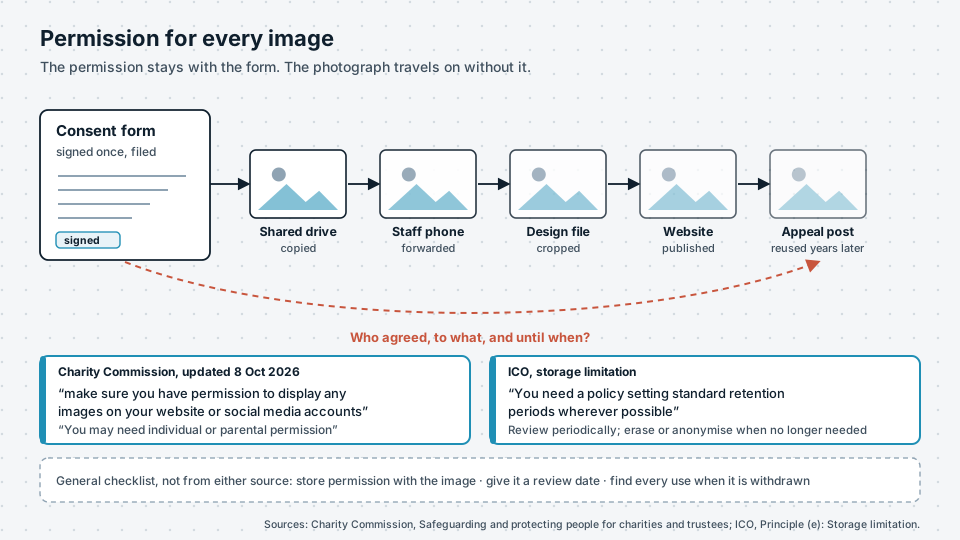
The Charity Commission updated its safeguarding guidance for trustees on 8 October 2026. It asks charities to make sure they have permission for every image on their website and social media, and data protection guidance asks how long that permission is kept.
Permission is collected once, on a form, and the photo travels everywhere else without it.