From the public record · UK central government · 2022
When people become the integration layer
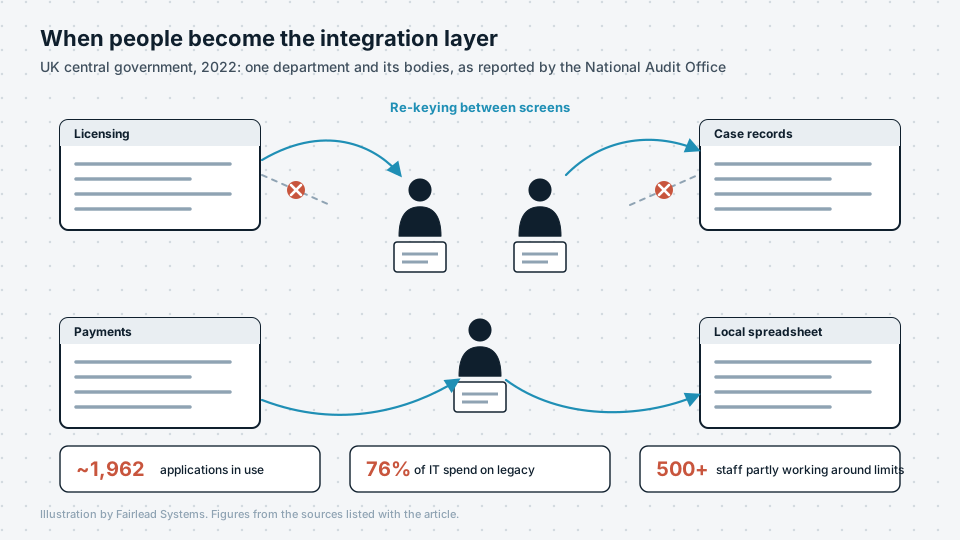
A 2022 National Audit Office report found a government department running around 1,962 applications, with legacy systems taking 76% of IT spend and more than 500 staff working around their limits.
What happened
In December 2022 the National Audit Office reported on the Department for Environment,
Food and Rural Affairs and its group of bodies. It found around 1,962 applications in use,
including locally developed spreadsheets and databases. About 30% were no longer supported
by their suppliers, and legacy systems accounted for 76% of IT spending.
Only around a third of 21 million annual customer transactions were fully digital, and more
than 500 contact-centre staff were employed partly to work around system limitations. Data
sat in separate systems with limited linking between them.
The pattern
Replacing core systems takes years and large budgets. In the meantime, the gap between
systems is filled by people: copying details from one screen into another, reconciling
spreadsheets, answering calls that a joined-up service would never have generated.
None of this is unusual. These figures come from a large department, but the same shape appears in councils, trusts and small firms: two systems, one person between them, and a spreadsheet to keep track.
What a proportionate fix looks like
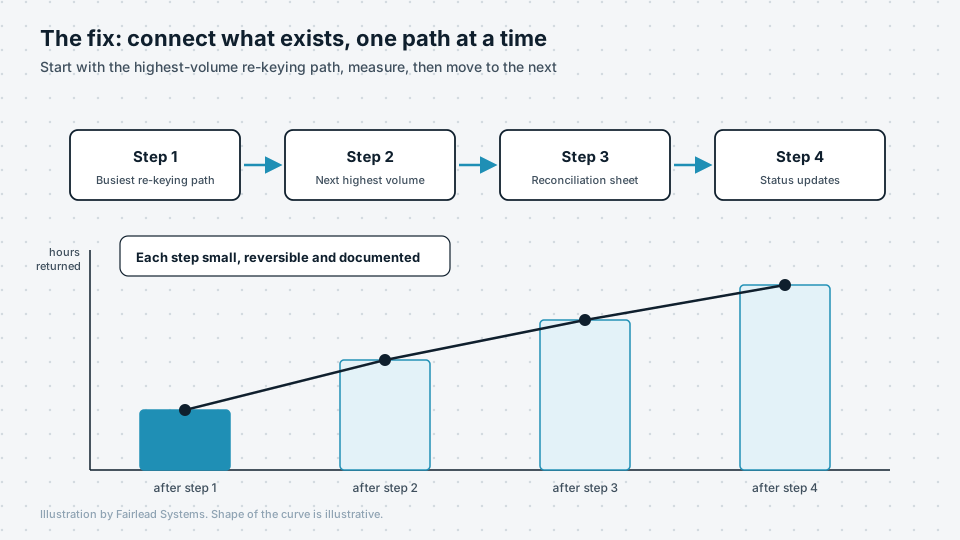
Connect one path at a time and measure what each step returns. The shape of the curve is illustrative.
Before a long replacement programme, connect what already exists. Pick the single
highest-volume place where staff re-key the same information, automate that path, measure
the hours it returns, and then move to the next. Each step is small, reversible and
documented, and each one is useful even if the larger programme changes direction.
The measurement matters. Hours returned, errors avoided and calls no longer needed are what make the case for the next step, and for the larger programme if it comes.
Questions worth asking
Where do staff type the same information into more than one system?
Which of those paths happens most often each week?
Is there an export or interface on either system that could be used instead?
How would we know, in hours per month, whether a change had helped?
Fairlead Systems was not involved in the events described here. The account above is drawn only from the sources listed, which were last checked on 1 October 2026. If you spot an error, write to us and we will correct it.
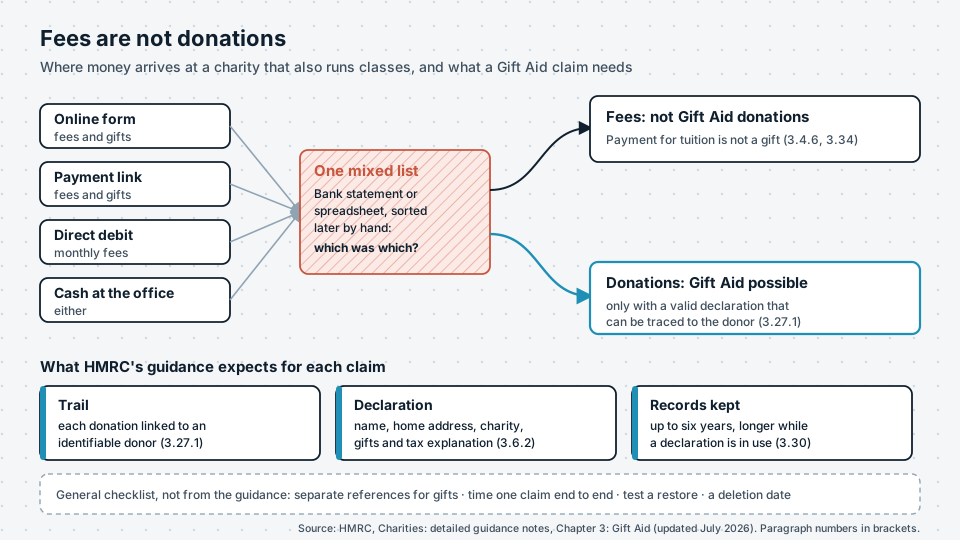
HMRC's Gift Aid guidance says payments for tuition are not gifts, and that every claim needs an audit trail from each donation to a valid declaration. Charities that take fees and donations through the same channels have to keep the two apart.
When fees and donations share one record, the Gift Aid claim inherits every mix-up.
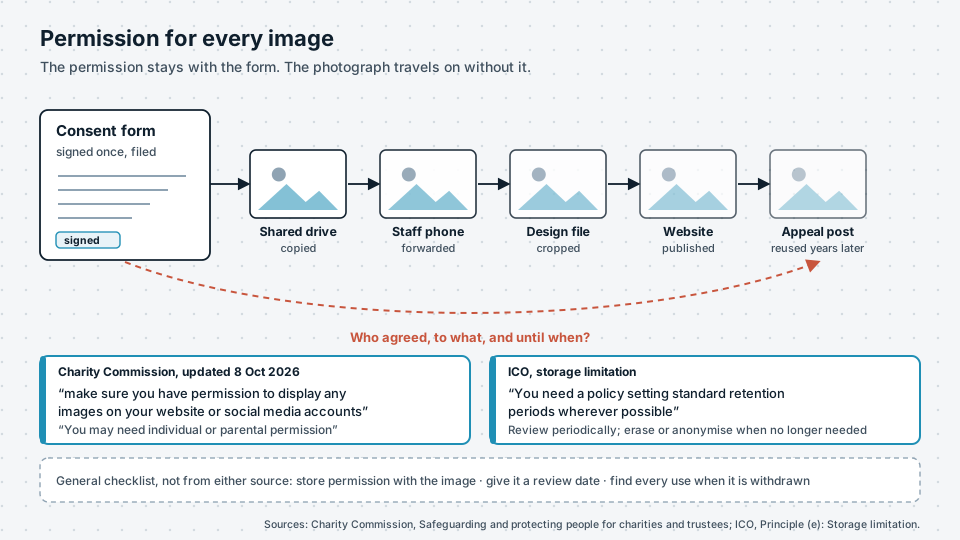
The Charity Commission updated its safeguarding guidance for trustees on 8 October 2026. It asks charities to make sure they have permission for every image on their website and social media, and data protection guidance asks how long that permission is kept.
Permission is collected once, on a form, and the photo travels everywhere else without it.
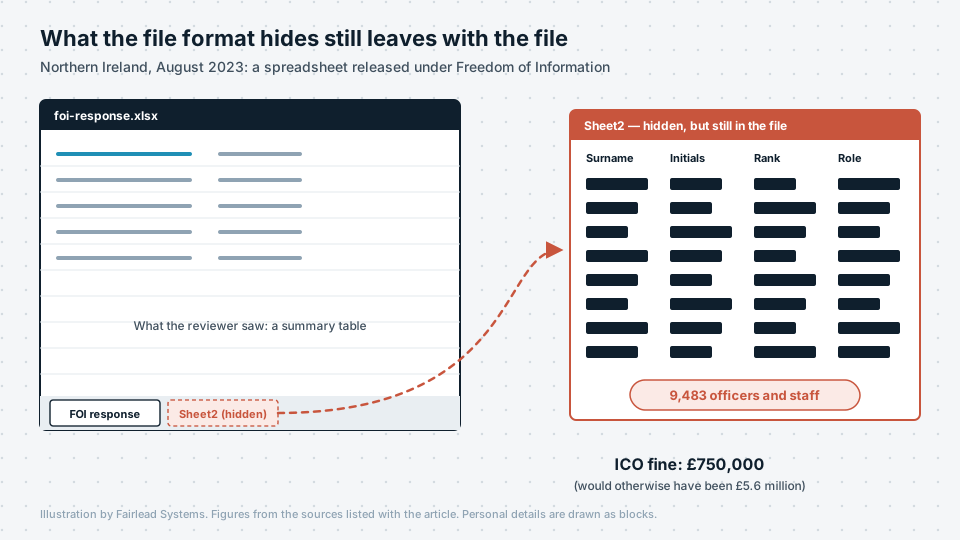
In 2023 a spreadsheet released under Freedom of Information contained a hidden tab with details of 9,483 police officers and staff. The ICO said simple internal processes could have prevented it.
A manual release step that relies on someone noticing what the file format hides.