What was published
On 8 October 2026 the Charity Commission updated its guidance for trustees, Safeguarding
and protecting people for charities and trustees, to reflect changes to some DBS checks
introduced in 2026 and the requirements of the Online Safety Act 2023.
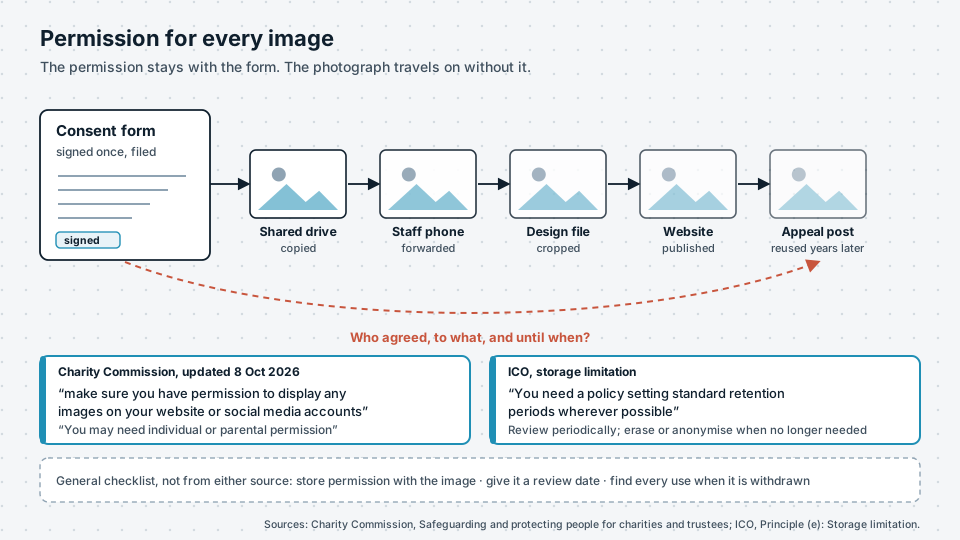
Its section on operating online asks trustees to “make sure you have permission to display
any images on your website or social media accounts”, and adds that “you may need
individual or parental permission”. It also says a charity should have a social media
policy, and that some charities may have to comply with the Online Safety Act.
Why it matters beyond this guidance
Schools, madrasahs and relief charities publish a steady flow of photographs and video:
classes, graduations, recorded lessons, appeals filmed in the field. Permission is usually
given once, on a paper form or in an email, and filed with that form. The image itself goes
somewhere else: a shared drive, a staff member’s phone, a design file, then a post that may
be reused in a campaign years later. By then nobody can say who agreed, to what, or whether
a parent has since asked for it to be taken down.
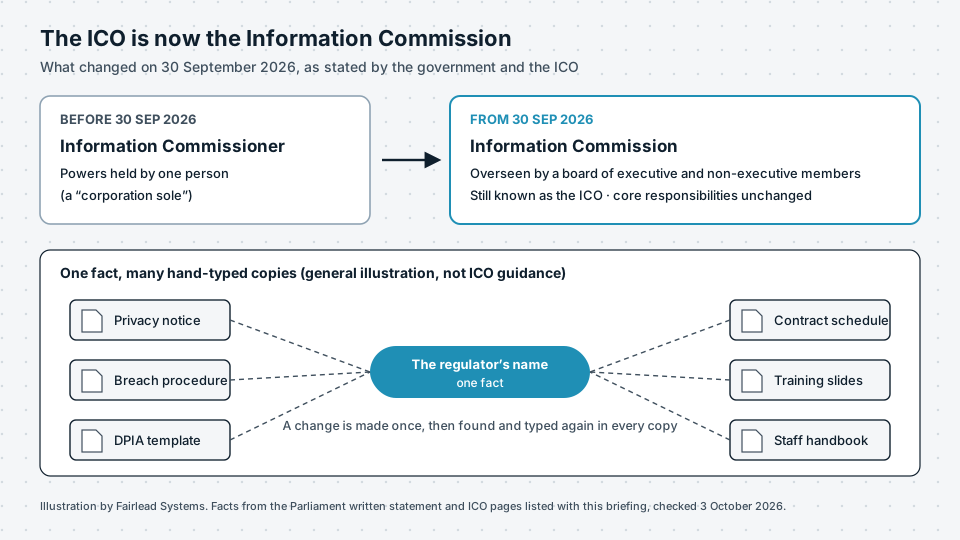
Data protection adds the question of time. The ICO, the data protection regulator now formally called the Information Commission, says that
“you need a policy setting standard retention periods wherever possible”, and that you
should “periodically review the data you hold, and erase or anonymise it when you no longer
need it”. A photograph in which someone can be recognised is information about that person,
so the same thinking applies to an archive of images and recordings.
What to check
- Choose any image on your website or social media today. Can you find the permission
behind it, and what it allowed?
- Is the permission stored with the image, or only with the form it arrived on?
- Does each permission have an end date or a review date?
- If a parent withdraws permission, can you find every place that image or recording is
used, including old appeals and recorded lessons?
- Who can post images to your public channels, and does that list match your social media
policy?
This note summarises published guidance. Fairlead Systems has no connection with the
Charity Commission or the ICO, and it is not legal advice: read the full guidance before
changing your policies.
Fairlead Systems was not involved in the events described here. The account above is drawn only from the sources listed, which were last checked on 17 October 2026. If you spot an error, write to us and we will correct it.