In 2020, 15,841 positive COVID-19 cases were left out of England's daily figures when a file format quietly cut off the data. The lesson is about hand-offs that fail without an error.
What happened
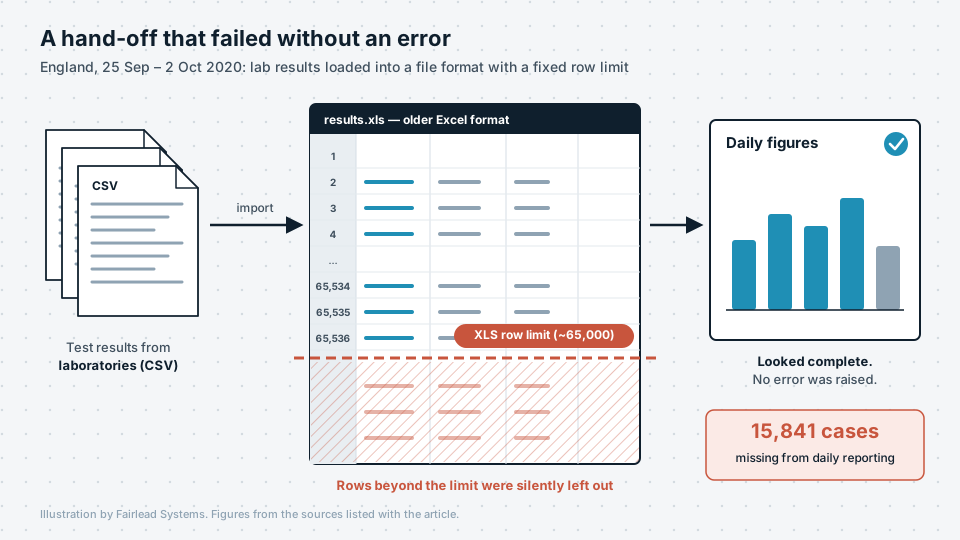
Between 25 September and 2 October 2020, 15,841 positive COVID-19 cases were missing from
England’s daily reporting. Test results arrived from laboratories as CSV files and were
loaded into an older Excel format (XLS) that holds roughly 65,000 rows. Each case used
several rows, so once the limit was reached the remaining data was simply cut off.
Nothing crashed and no error appeared. The file was just shorter than it should have been.
Contact tracers were delayed in reaching an estimated 60,000 or more close contacts.
The pattern
Most organisations move data between systems in ways nobody watches: an export, an
import, a copy into a spreadsheet, an upload into another tool. Each step usually works.
The dangerous failures are the ones that do not announce themselves, because nobody looks
for a problem they have not been told about.
Limits on row counts, file sizes and field lengths are written down somewhere, but rarely where the people running the process day to day will see them.
What a proportionate fix looks like
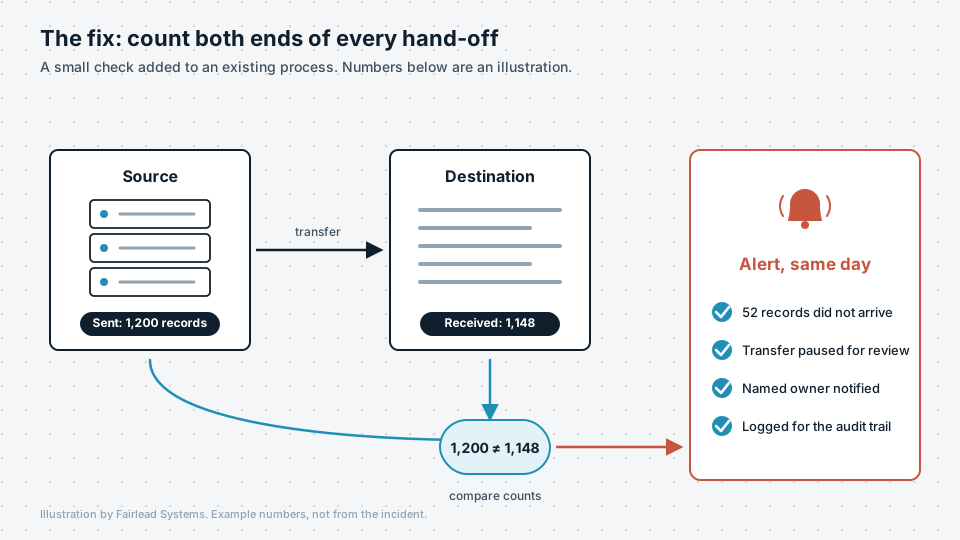
Counting both ends of a hand-off turns a silent failure into a visible one. Example numbers.
Every automated hand-off should count what it sends and what it receives, and raise an
alert the moment the two numbers differ. It is a small addition to an existing process,
not a new system, and it turns a silent failure into a visible one on the same day.
If a step in your process copies data from one place to another, it is worth asking a
simple question: if half the data went missing tomorrow, who would notice, and when?
A count check is not a full audit. It will not tell you whether the data is correct, only whether all of it arrived. That is often the single most useful thing to know, and it is cheap to add.
Questions worth asking
Which steps in our process move data from one system or file to another?
For each one, does anything compare what was sent with what arrived?
Do any of those steps depend on a file format, template or tool with a size limit?
If a transfer came up short, who would be told, and how quickly?
Fairlead Systems was not involved in the events described here. The account above is drawn only from the sources listed, which were last checked on 1 October 2026. If you spot an error, write to us and we will correct it.
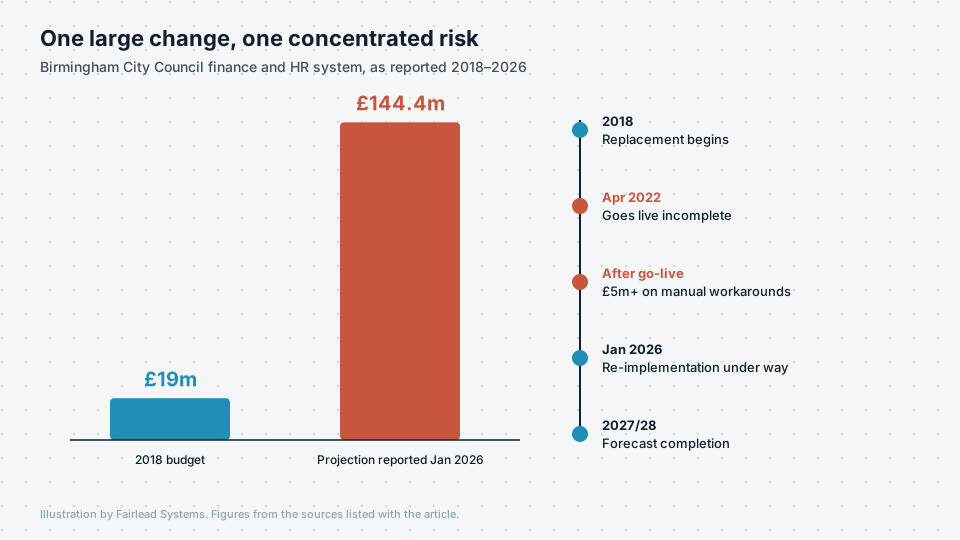
A council finance and HR system budgeted at £19m in 2018 was reported in January 2026 to be heading for £144.4m. For smaller organisations the transferable lesson is about the size and shape of change.
Large, heavily customised changes concentrate risk in one place.
Read the article →
From the public record · London 2020 · Ireland 2021
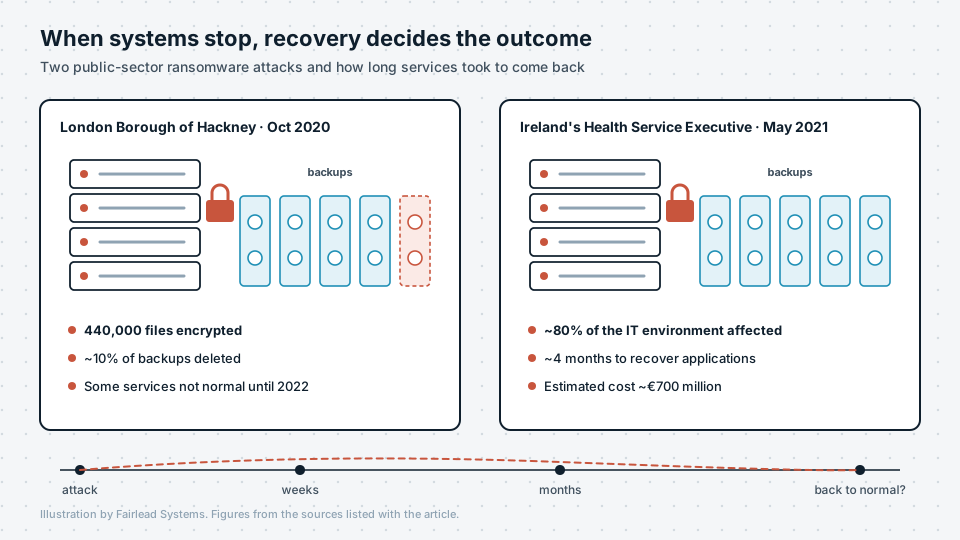
Ransomware attacks on Hackney Council in 2020 and Ireland's health service in 2021 disrupted services for months. The question that matters is whether a service can keep running, and whether recovery has ever been tested.
Recovery plans that have never been rehearsed.
Read the article →
From the public record · UK central government · 2022
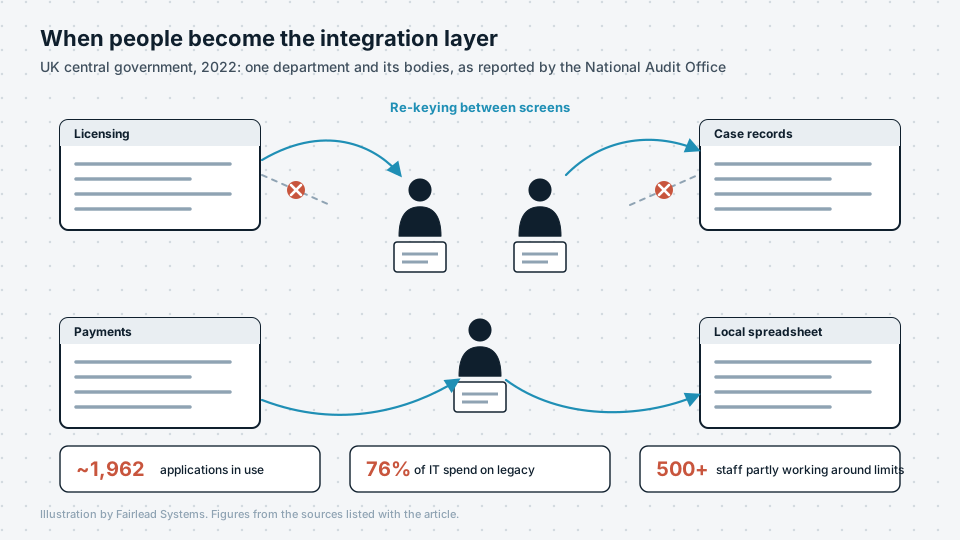
A 2022 National Audit Office report found a government department running around 1,962 applications, with legacy systems taking 76% of IT spend and more than 500 staff working around their limits.
Replacement is slow, so people re-key data between systems that cannot talk to each other.